
If you run a roofing company, an HVAC business, a landscaping crew or a real estate team in Frisco, you probably get leads from several places at once: Google, Facebook, Zillow, referrals and your own website. The leads that turn into jobs are rarely the "best" ones. They are the ones that got a quick, friendly answer. Lead follow-up automation for Frisco home services and real estate makes that answer happen every time, even when you are on a roof or in a showing.
This guide explains what to automate, what to keep human and how a tool like GoHighLevel puts it all in one place.
Why follow-up decides who wins the job
Homeowners rarely contact just one company. They fill out two or three forms, then talk to whoever replies first and sounds easy to work with. The same is true for people searching for a home in Collin County.
The numbers back this up. In a Harvard Business Review study of 2,241 U.S. companies, firms that contacted a web lead within an hour were roughly seven times as likely to have a meaningful conversation with a decision maker as firms that waited just one more hour. Compared with waiting 24 hours or longer, the gap was more than 60 times.

That research looked at online leads in general, not Frisco specifically, but the pattern is easy to recognize in any busy service business. The company that answers first starts the relationship.
What GoHighLevel does
GoHighLevel is a customer management and marketing platform used by many agencies and small businesses. In plain terms, it gives you one inbox for calls, texts, emails and form submissions, a pipeline that shows where every lead stands and a workflow builder that can send messages automatically.
I use it to connect websites, ad forms and chat tools so every new lead lands in the same place with the same follow-up. A lead from your website form, a Facebook ad or a missed call all become one contact record, with the source attached. If you want a deeper look at what else can be automated, read the guide to 5 workflows Frisco small businesses can automate.
The follow-up sequence I recommend
Good automation sounds human, arrives quickly and stops the moment the person replies. Here is a simple sequence that works for most home service and real estate businesses.

- Instantly: a text that thanks the person, confirms what they asked for and says when to expect a call.
- Within five minutes: an alert to you or your office with the lead's name, phone number, request and source.
- Within an hour: an email with your service area, what happens next and a link to book an estimate or showing.
- Next day: a short reminder text if you have not connected yet.
- Day three: a final friendly message that leaves the door open.
To make that concrete, here is the kind of wording I use. The first text might read: "Hi Karen, this is Mike from Lone Star Roofing. Thanks for reaching out about your roof. I will call you within the hour. If you prefer text, just reply here." The reminder the next day can be even shorter: "Hi Karen, just checking that you still need a roof inspection. Happy to come by this week." Notice that neither message sells anything. Each one makes the next step easy.
For real estate, swap the details: mention the neighborhood or listing, offer two showing times and ask one simple question, such as whether the buyer is pre-approved or still exploring. One question gets more replies than three.
Every message should be short, plain and signed by a real person. Avoid long sales pitches. The goal is to start a conversation, not close the deal by text.
Manual versus automated, side by side
Most owners follow up manually and do a good job when they have time. The trouble is that time disappears on busy days, which is exactly when leads arrive.

Automation does not make you less personal. It protects the personal part by handling the repetitive reminders, so you can spend your energy on the calls and visits that win the work.
Keep the pipeline simple
A pipeline is just a list of stages. For a home service business the stages might be New, Contacted, Estimate booked, Estimate sent, Won and Lost. For a real estate team they might be New, Contacted, Showing booked, Offer and Closed. Moving a lead from one stage to the next can trigger the right message or task automatically.
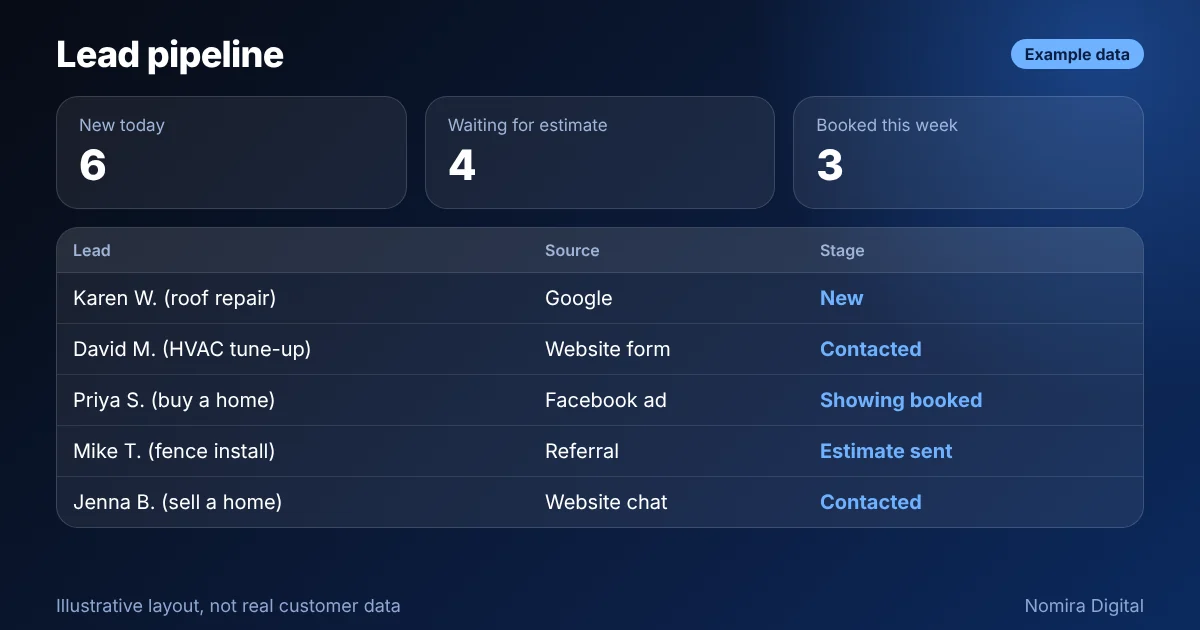
Check the pipeline once a day. If leads sit in "New" for more than an hour, your alert settings need work. If many leads sit in "Estimate sent", add a reminder message that asks if they have questions.
Rules that keep automation friendly and legal
Automated texts and emails are regulated. In the United States, marketing texts generally require the person's consent, and every message series needs a clear way to opt out. Include your business name in each text, honor "stop" replies immediately and keep the messages relevant to what the person requested. Rules change, so confirm the current requirements with a qualified advisor. This article is general information, not legal advice.
Start with one workflow
Pick your busiest lead source, connect it to a pipeline and add the instant text plus the team alert. That alone fixes the biggest leak for most businesses. You can add reminders and review requests after a week or two, once you see how the first piece behaves.
It also helps to decide who owns each lead. In a team, assign every new contact to a person automatically, such as the estimator for that area or the agent on duty that day. In a market as busy as Frisco, where one weekend storm or one new listing can bring a flood of inquiries, a clear owner prevents two people from calling the same customer and a third lead from being forgotten.
I build and manage these systems through Nomira Digital for businesses in Frisco and across DFW, including websites and ad forms that feed directly into the pipeline. If you want to see how this would work for your company, contact me or look at our website development services in the USA to see how the pieces fit together.